
Post-Merger Integration in Asia: What Role Do Interim Managers Really Play?

Updated: Feb 28

Private Equity M&A in the Asia-Pacific region is developing dynamically and presenting decision-makers with exciting challenges – particularly in the critical phase of Post-Merger Integration (PMI). In 2024, the volume of buyout investments in the region reached an impressive USD 138 billion, representing an increase of 8.1% compared to the previous year and marking the second-best result of the past ten years. This positive trend is continuing in 2025: in the first quarter, the value of buyout deals doubled compared to the same period the year before, reaching USD 57.6 billion, driven by major transactions in Japan, India, and Southeast Asia.
At the same time, the number of deals in the region rose by 12%, with countries such as Japan standing out with a deal value growth of 75.8%. These figures confirm that Private Equity in Asia-Pacific is a decisive growth driver for M&A activity and, in an increasingly volatile global environment, is regarded as an important engine for value creation.
For Private Equity executives responsible for post-merger integration, this creates enormous opportunities but also significant challenges. The complexity of integration increases in light of cultural diversity, regulatory differences, and operational specifics in the region. A deep understanding of these challenges, along with proven solutions – such as those provided by interim managers – is therefore essential to ensure the success of PE-driven M&A deals.
Below, I will highlight the key challenges of PMI in PE transactions and present practical solutions through interim management – with a look at trends and market data that underline the importance of this topic.
The 5 Biggest Challenges in Post-Merger Integration (PMI) for Private Equity Transactions in Asia
Post-Merger Integration is the critical period during which two companies must be merged into a successful entity. Especially in the dynamic and diverse Asia-Pacific region, specific challenges arise that significantly influence the success of PE deals:
Cultural integration and employee retentionAsia is characterized by immense diversity in cultures, business practices, and languages. Cultural differences between acquirers and target companies can lead to misunderstandings, conflicts, and ultimately a decline in employee motivation. Particularly in countries with strongly hierarchical corporate structures, such as Japan or South Korea, a sensitive approach is necessary. At the same time, retaining key personnel is essential to safeguard know-how and stability within the company. PE firms often face high turnover rates here, which complicates the integration process.
Operational and technical systemsThe merging of different IT systems, processes, and reporting standards poses a complex challenge. Disparate ERP systems, data silos, and inconsistent financial reporting can disrupt business operations and delay synergies. In many Asian markets, there are also significant differences in terms of digitalization levels and technological infrastructure.
Communication and change managementLanguage barriers and differing communication styles hinder the flow of information during integration. While open and direct communication often prevails in Western markets, more indirect and context-driven interaction dominates in parts of Asia. This can result in critical information not being shared in time or being misinterpreted. Professional change management is necessary to involve employees in the process and reduce anxieties.
Regulatory specifics and complianceRegulatory requirements vary greatly between Asian countries. From labor law and data protection to environmental regulations, PE firms must thoroughly understand and comply with local legal frameworks. Delays due to lengthy approval processes or compliance requirements can significantly hinder integration plans.
Realization of synergies and value creationOften, large synergy potentials are forecast before a transaction, but in practice they are difficult or delayed to realize. Overly optimistic assumptions, along with insufficient planning and management, can lead to missed expectations or even value loss.
Interim Managers: The Secret Weapon for Successful Integration
In light of these challenges, interim managers are becoming increasingly important. They bring the necessary flexibility and expertise to successfully manage complex integration processes in the often fast-paced PE world.
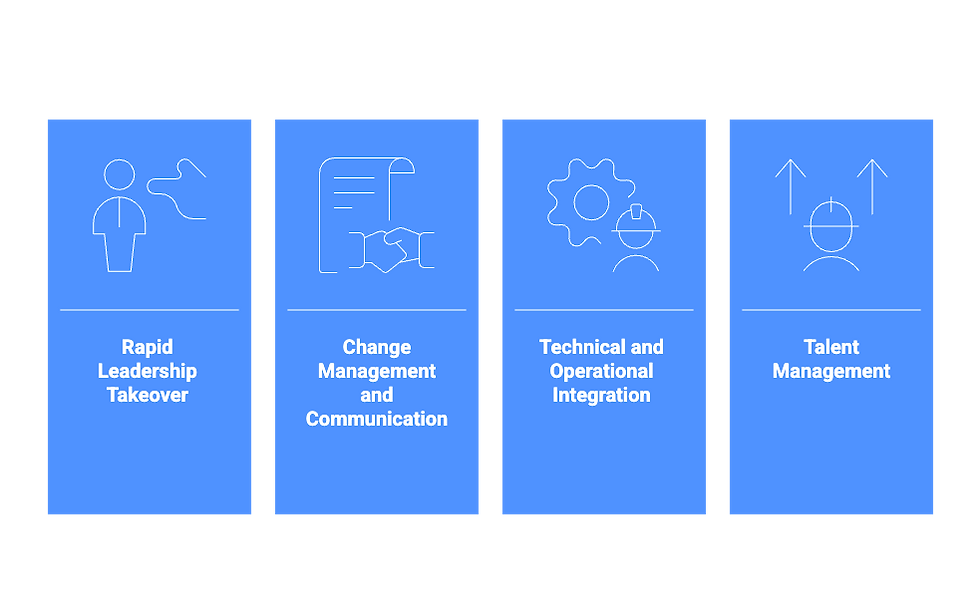
Key responsibilities and competencies of interim managers include:
Rapid leadership takeover: Interim managers quickly ensure leadership capacity to stabilize business units during integration and maintain operational continuity.
Change management and communication: They act as a bridge between cultures and stakeholders, communicate transparently, and build trust.
Technical and operational integration: Interim management experts coordinate the harmonization of IT systems, processes, and financial reporting, reduce silos, and promote process efficiency.
Talent management: They implement critical personnel development steps, support the retention of key talent, and shape organizational changes with attention to local specifics.
Practical examples from the Asian market show how interim managers create value:
In a regional manufacturing company, an interim CEO took over integration leadership after a PE transaction, merged ERP systems, and improved reporting accuracy by 60% within two months.
An interim HR director supported a financial services provider in Southeast Asia with cultural transformation and employee retention through targeted workshops and tailored development programs.
As integration project manager for an international food manufacturer, an interim manager led the consolidation of supply chains across several Asian countries, ensuring smooth operations despite complex regulatory conditions.
Best Practices for Using Interim Management in APAC
For PE firms and companies looking to leverage interim managers in post-merger integration, the following success factors have proven effective:
Early involvement: Interim managers should be engaged before deal closing to prepare integration processes.
Local expertise: Interim managers with experience in the respective Asian markets better understand cultural, regulatory, and market-specific nuances.
Clear roles and responsibilities: Transparent definition of responsibilities avoids overlaps and enables swift decision-making.
Results-oriented reporting: Continuous tracking of progress against clear KPIs allows for timely corrective measures.
Flexibility: Interim managers must react agilely to unforeseen challenges and quickly bring in additional expertise when needed.
Outlook and Recommendations
The dynamic growth of Private Equity-driven M&A activities in Asia-Pacific offers immense opportunities for value creation but also brings risks during the integration process. Interim managers have established themselves as versatile and effective problem-solvers in this phase and will play an even greater role in the future.
Private Equity decision-makers should therefore:
Strategically plan PMI early and embed interim managers as integral partners
Invest in the development of change management capabilities and cultural expertise
Rely on experienced interim managers with regional market know-how who can act flexibly and swiftly
By doing so, they ensure sustainable integration success and lay the foundation for long-term enterprise value – especially in a complex, diverse market like Asia-Pacific.
If you would like to learn more about my interim management services and successful PMI strategies, I warmly invite you to get in touch.
FAQ: Post-Merger Integration in Asia with Interim Managers
Why does Private Equity play an important role in M&A in the Asia-Pacific region?
Private Equity is a key driver of M&A in the Asia-Pacific region, with deal volume exceeding USD 175 billion in 2024. The region offers strong growth opportunities fueled by a growing middle class, urbanization, and technological advancement. PE firms are increasingly investing in countries such as India, Japan, and Southeast Asia to capitalize on these trends.
What major problems frequently arise in Post-Merger Integration (PMI) in PE deals in Asia?
Typical challenges include cultural differences that can lead to conflicts, complex regulatory requirements, the harmonization of different IT and reporting systems, employee retention, as well as the effective management of communication and change processes.
How can Interim Managers support Post-Merger Integration?
Interim Managers quickly bring leadership experience to the table, steer the integration process, foster cultural integration, harmonize operational systems, and support talent management. They are highly flexible and can respond rapidly to unexpected challenges.
What advantages does the use of Interim Managers offer specifically in the APAC region?
Interim Managers with regional expertise understand local market conditions, cultural nuances, and regulatory requirements. This enables them to make integrations more efficient and less risky, thereby ensuring the long-term success of PE transactions in Asia.
What best practices should PE firms follow when using interim management for PMI?
Early involvement of Interim Managers, clear definition of roles and responsibilities, continuous tracking of integration progress through KPIs, a strong focus on cultural adaptation, and flexibility in resource planning are all crucial for a successful integration.


